How to Choose the Best Electric Water Heater for Your Needs?
Choosing the right Electric Water Heater can significantly impact your home’s comfort and energy efficiency. With various models available, selecting the best one for your needs may seem overwhelming. Factors such as size, energy efficiency, and type of heating method are vital to consider.
Electric water heaters come in different types, including tankless and storage models. Each type has its benefits and drawbacks. For instance, tankless heaters offer endless hot water but may have higher upfront costs. On the other hand, traditional storage heaters are often more affordable but can take longer to heat water.
Understanding your household's hot water demands is crucial. Do you have a large family or live alone? The answer will guide your choice. Research can be daunting, and manufacturers often advertise similar features. It’s essential to read reviews and consult expert opinions to identify reliable options. A thoughtful selection in an electric water heater can lead to long-term cost savings and improved comfort. Make your choice wisely.
Understanding Electric Water Heater Types and Their Features
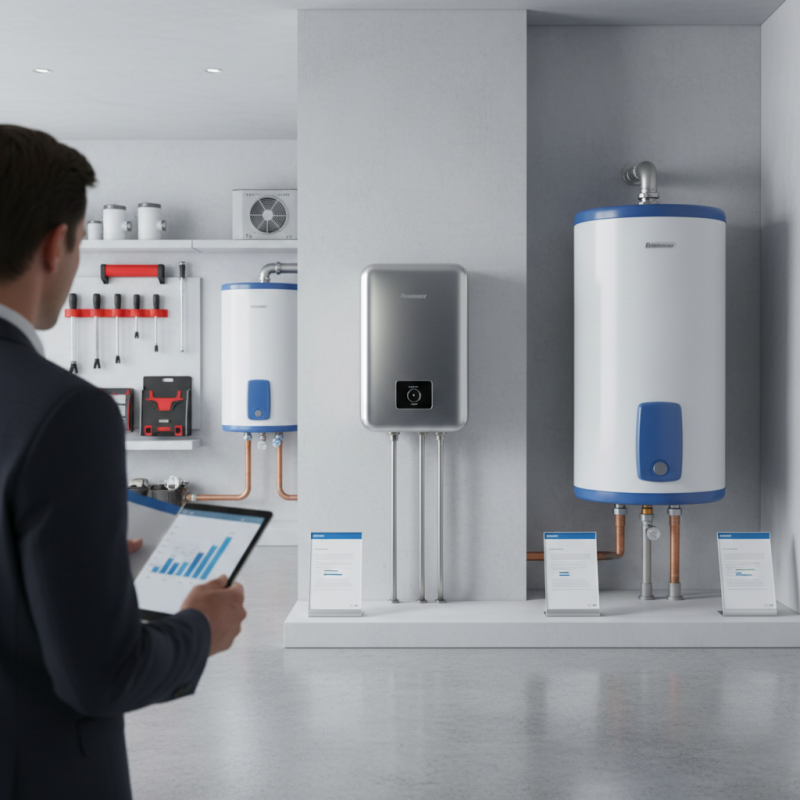
Choosing the right electric water heater involves understanding its types and features. There are primarily three types: tank water heaters, tankless water heaters, and heat pump water heaters. Each has unique advantages that suit different household needs.
Tank water heaters are popular for their capacity. They store a specified amount of hot water, typically between 20 to 80 gallons. This makes them ideal for larger families. However, they consume energy continuously to keep water hot, leading to higher electricity bills.
Tankless water heaters offer instant hot water, eliminating standby heat loss. They are compact and energy-efficient, but often struggle to supply multiple outlets at once. According to the U.S. Department of Energy, these systems can be up to 30% more efficient than traditional tank models.
Heat pump water heaters utilize ambient air to heat water, making them energy-efficient options. They can cut energy usage by up to 60%. But, they require specific climate conditions to operate efficiently, which may limit effectiveness in colder areas.
Tips: When choosing a heater, consider your household size and usage patterns. A 50-gallon tank may suffice for a small family, while larger homes might need a larger tank or a tankless option. Always check energy efficiency ratings to avoid excessive energy costs.
Comparison of Electric Water Heater Types
This bar chart illustrates the efficiency ratings of different types of electric water heaters, helping you understand their performance to choose the best option for your needs.
Assessing Your Hot Water Demand and Daily Usage Needs
When choosing an electric water heater, assessing your hot water demand is crucial. Start by evaluating how many people live in your home. A family of four typically requires more hot water than a single person. Understanding daily routines helps. Shower times, laundry days, and dishwashing should all be considered.
Calculate your daily hot water usage. For example, a shower may use about 10 gallons, while a bathtub can require 30 gallons. Look into peak usage times. Simultaneous use of multiple fixtures can strain a smaller unit. This requires more reflection on your specific needs.
Consider your lifestyle choices, too. Do you enjoy long baths or quick showers? Are there any specific times you need more hot water? These details matter greatly. Finally, remember that oversize units can waste energy. Aim to find the right balance for your household needs.
How to Choose the Best Electric Water Heater for Your Needs?
| Water Heater Type | Capacity (Gallons) | Power Rating (kW) | Heat-Up Time (Hours) | Usage Type |
| Tank | 40 | 4.5 | 1.5 | Residential |
| Tankless | N/A | 8.0 | Instant | Residential/Commercial |
| Heat Pump | 50 | 3.0 | 2.0 | Residential |
| Solar | 80 | N/A | Varies | Residential |
| Point of Use | 6 | 1.5 | 0.5 | Residential |
Evaluating Energy Efficiency Ratings and Cost Savings
Choosing an electric water heater involves careful evaluation of energy efficiency ratings to ensure cost savings. Understanding energy ratings can save you money in the long run. Look for units that meet or exceed local efficiency standards. Higher efficiency ratings often mean reduced energy bills.
Consider the size of your household when selecting a model. A larger family may benefit from a larger heater, but this could increase costs if the unit isn't energy efficient. Sometimes, smaller heaters designed for specific use cases, like point-of-use heating, can be cheaper and more efficient.
Tips to keep in mind:
- Check for energy labels before making a decision.
- Compare annual operating costs, not just the purchase price.
- Read reviews to gauge reliability and performance.
Inadequate research can lead to regrets. It's important to think about your actual usage patterns. Investigate whether your water heater's capacity supports your daily needs effectively. A model that’s too large can waste energy, while one that’s too small may not meet demands.
Considering Space Requirements and Installation Options
When considering the installation of an electric water heater, space requirements play a crucial role. You must evaluate the area available in your home. Many heaters require specific clearance space for safety and maintenance. Measure the height, width, and depth of the installation area carefully. Ensure that there are no obstructions nearby. These measurements help narrow down the heater selection.
Installation options also depend on your space. Some units can be installed in tight spaces, while others need more room. There are tankless models that take up minimal space. These heaters can be mounted on walls, freeing up floors for other uses. Traditional tanks often occupy significant floor space, which can be an issue in smaller homes.
Ventilation considerations also affect installation. Some units need proper ventilation to operate efficiently. Poor ventilation can lead to inefficient heating and increased energy costs. Assess whether your home can accommodate necessary vent lines. Make sure to consult an expert if you are unsure about your choices. The right installation impacts not just functionality, but also safety in your home.
Exploring Additional Features and Warranty Considerations
When selecting an electric water heater, it's crucial to consider additional features and warranty options. Many modern models come with advanced technologies like smart control systems. These features help users monitor energy consumption. According to the U.S. Department of Energy, upgrading to an energy-efficient model can save homeowners 10-50% on water heating costs.
Warranty considerations also play a significant role. A standard warranty may cover parts for 6-12 years. However, an extended warranty offers peace of mind for a longer period. Research shows that about 20% of water heaters fail within the first 10 years. A robust warranty can protect against unexpected expenses, ensuring long-term reliability.
It’s worth noting that installation and maintenance affect the longevity of the heater. Some homeowners overlook this aspect, leading to potential issues. Regular inspections and timely repairs can enhance performance. While many factors influence the choice, prioritizing features and understanding warranty terms can significantly impact overall satisfaction.
